The Bihu Festival is Assam’s most important cultural and agricultural festival, consisting of three distinct celebrations—Rongali Bihu (spring and sowing), Kongali Bihu (austerity and crop protection), and Bhogali Bihu (harvest and feasting). Deeply rooted in agrarian traditions, Bihu reflects the cycle of farming life while uniting diverse ethnic communities across caste and tribal lines. With its vibrant dance, music, rituals like Goru Bihu and Meji, and traditional cuisine such as Pitha and Doi-Chira, Bihu represents not just a festival but a living expression of Assamese identity, sustainability, and cultural continuity.
In the valleys around the Brahmaputra, everything feels so alive with that mist hanging on the hills and the smell of those orchids, the Kopou Phul. It is kind of what draws you into Assamese culture right away. Bihu, that is the heart of it all.
Assam in Northeastern part of India has this mix of people, pluralistic society they call it, and it is all tied to farming life. Bihu keeps coming up as more than festivals. There are three of them, marking the planting, harvesting, those stages in agriculture. What stands out is how inclusive it is, crossing over castes, creeds, even tribes. It pulls together all these different ethnic groups in Assam. I think that is why it is such a strong thread for them.
The dhol drums beating and the dancers with their steps, it captures that resilient side, the joy too. And the collective feeling, shaped by the mighty Brahmaputra River, there.
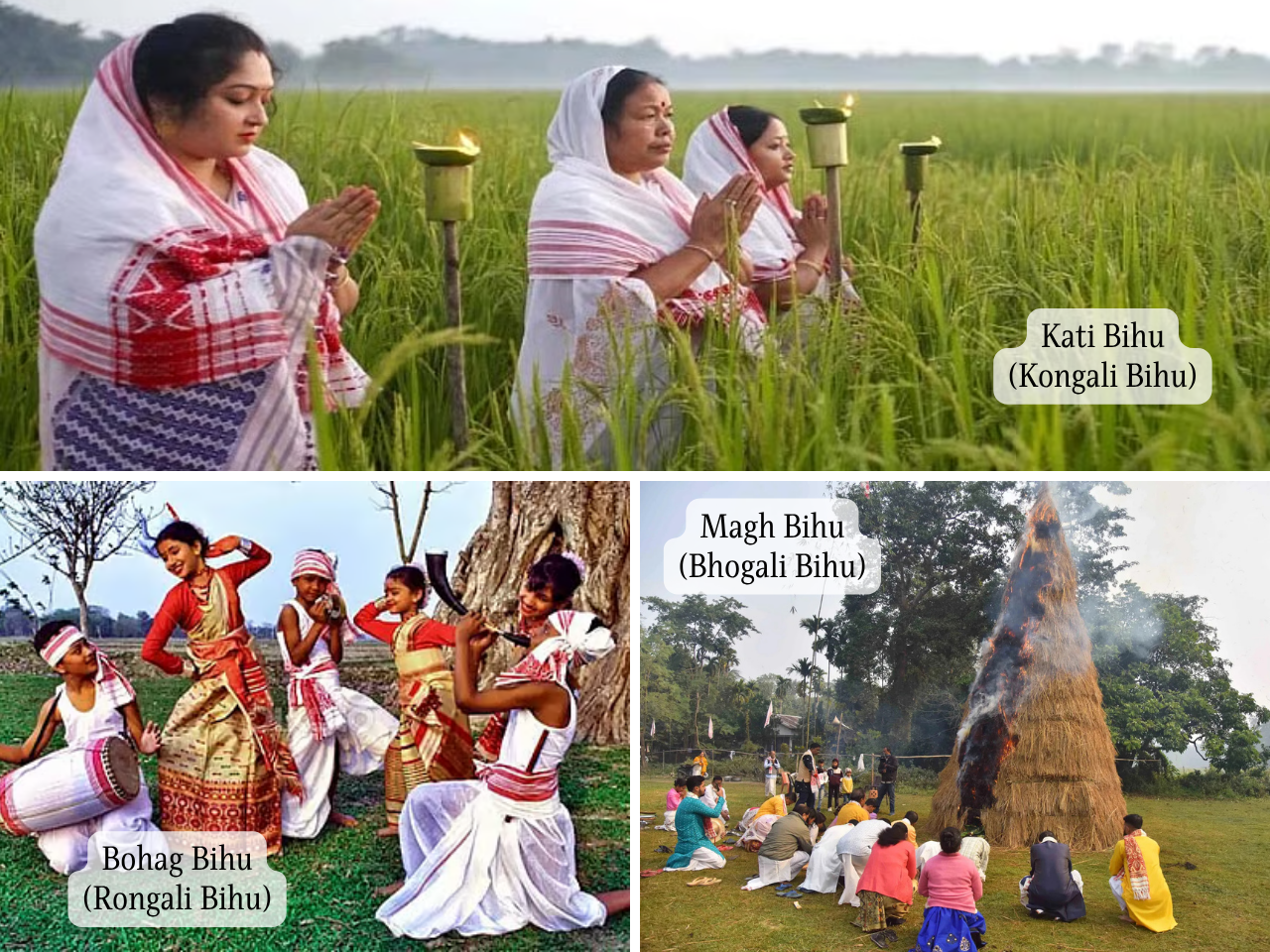
Kati, Bohang, and Magh Bihu Rituals
The Assamese year is based on the three Bihus which represent different stages of agriculture and particular moods of life.
Bohag Bihu can be considered the peak of Assamese culture. Although it celebrates the Assamese New Year, agriculturally, it celebrates the coming of the rains to plough the fields.
Traditionally, Bihu is marked for seven days, also called Xaat Bihu. The days have different significance as follows:
‘Rongali’ refers to a period of euphoria among all. This is the time when Kopou Phul (Foxtail Orchid) blossoms and when cuckoos sing. The dances that are done during this period, involving fast movement of the hips and coordinated steps, are symbols of fertility and are meant to awaken Mother Earth.
Despite being termed ‘poor’ festivals, Kati Bihu may well be regarded as the most spiritual and most resilient phase of all three.
By October, there has been consumption of the previous year’s harvest, while nothing much from the new season has arrived. Thus, a period of penury emerges (Kongali).
While Bohag Bihu is characterised by drum beats, this particular season remains quiet. Lighting of Saaki (clay lamps) forms a major part of rituals in Kati Bihu.
Magh Bihu signifies the conclusion of the harvesting period. Once the Bhoral (granaries) are full, the emphasis shifts from the backbreaking effort in the field to the cosy hearth.
The night before the festival is an occasion for community bonding. The men remain overnight at the Bhelaghors, which are makeshift structures made from hay and bamboo. They prepare sumptuous food using the open hearth. It signifies a nomadic community life for a night.
At the dawn of the first day of Magh, the Meji, a tower-like construction of firewood and straw, is ignited. It is the offering of deep gratitude to Agni (Fire God). People make offerings of Pithas and betel nuts for the fire.
“Bhogali” means the completion of the efforts undertaken throughout the year. Sports like Moh-juj (buffalo fights) and egg-breaking competitions are common. It is an affirmation of the physical fitness that results when the community is well-fed and well-rested.
Bihu History is an amalgamation of Austro-Asiatic, Tibeto-Burman, and Indo-Aryan cultures.
The anthropological school argues that Bihu is a product of the ancient fertility dance ritual conducted by aboriginal communities such as the Kacharis, Chutias, and Boros. These tribes danced to please the Earth Goddess to secure an abundant harvest, long before the name “Assam” came into existence.
According to historical evidence, the Husori and the playing of musical instruments, including the Dhol, evolved in the courts of the Chutia and Kachari monarchies.
The Ahom dynasty largely contributed to the development of Bihu as we know it today. The Ahom ruler, Rudra Singha (1696–1714), was instrumental in transforming the village celebration of Bihu into an elaborate affair at the royal court (Rongghar).
Bihu was originally born out of necessity. At a time when people lived in harmony with nature, these festivals organised the labour force of the community. They provided a psychological outlet for the members of the tribe to unite in a celebration, thereby fortifying their defences against hostile forces.
Bihu is not just a festival; it is the essential “social fabric” that binds the multi-ethnic Assam together. In order to comprehend the socio-political construct of Assam, Bihu can be seen as the binding force that brought hundreds of different communities together to make them linguistically and culturally cohesive.
The region of Assam has witnessed tremendous ethnic diversity over centuries. The people include the Misings, Deoris, Tiwas, Kacharis, Boros, and many more. Each group would have its individual ritual regarding agriculture. But then, Bihu was a “meta-identity”.
Though there is a celebration like Ali-Aye-Ligang among the Misings and a Baisagu by the Boros, what is common to both of them is the spirit of celebrating the spring season, the harvest, and the fertility of the Earth.
Over generations, all those tribal celebrations converged and formed an “Assamese Bihu” festival where every group could preserve their identity while being part of a common “Assamese” ethnicity through the beat of the Dhol.
Many festivals in South Asia are segregated according to the strict caste system. Bihu represents a complete break from such traditions.
In the Bihu Toli (area of Bihu performance), there are no hierarchies apart from those based on talent alone. The chief performer in Bihu is called Oja-Dhulia, and he is highly regarded despite being from a lower caste.
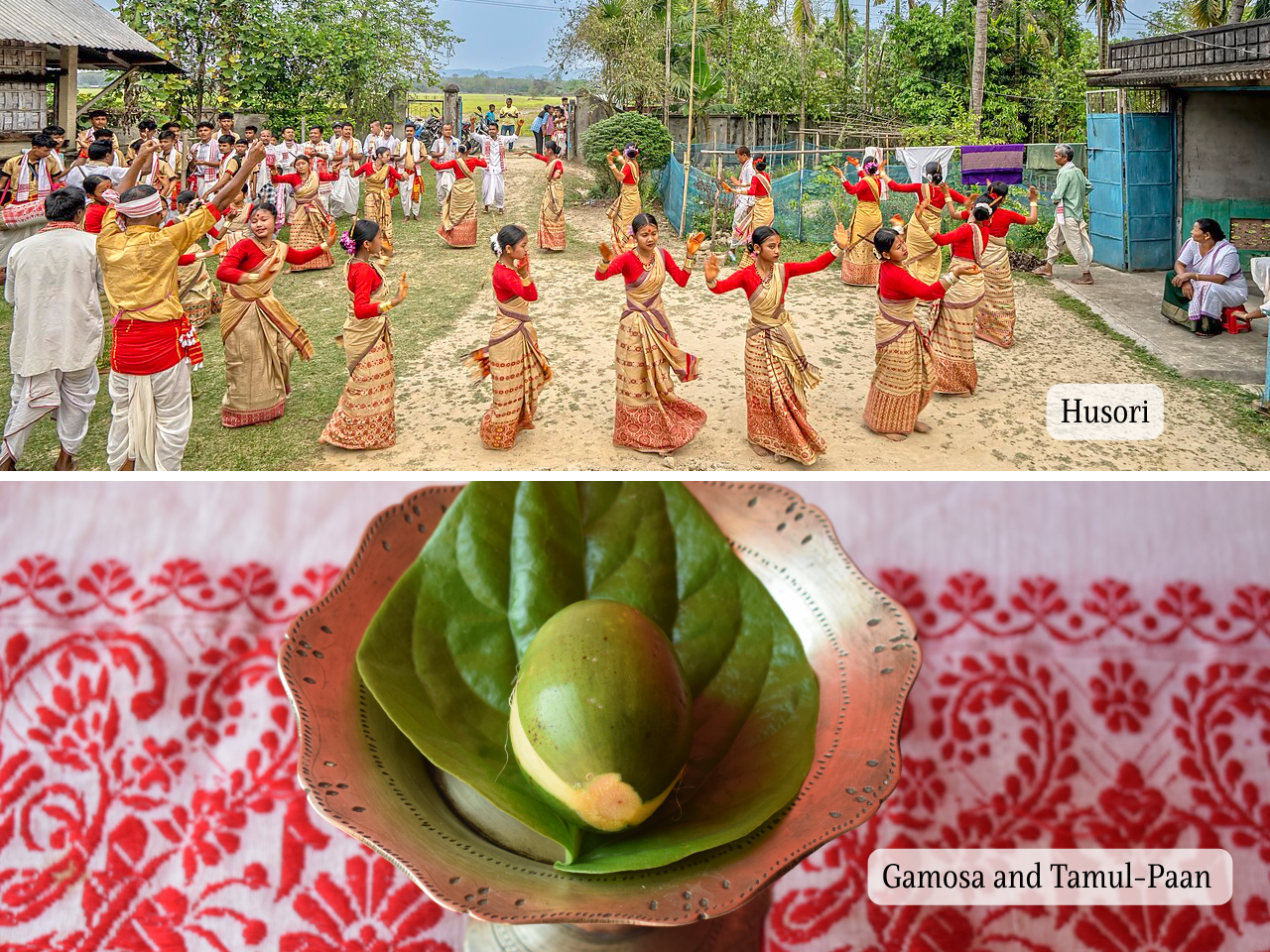
Bihu Husori Puja Requirements
As part of the Bihu festival, the custom of visiting the houses of people (Husori) ensures that both high and low social groups interact. While entering the courtyard, the performers are greeted with a Gamosa and Tamul-Paan, an act that compels respect among all present and fosters a feeling of horizontal social bonding.
The Assamese identity has always found its voice in Bihu, though it is voiceless.
Colonial authorities had been known to dismiss Bihu on occasion, calling him “primitive” or “vulgar.” These views led both intellectuals and ordinary Assamese people to take control of their festival, asserting their ethnicity as a declaration that their culture could not be colonised.
Bihu songs, traditionally songs about love and nature, were redefined as songs of love for the motherland during the social movements of the 1970s and 80s (also called the Assam Agitation). Bihu Naam turned into protest songs and instilled a sense of pride and loyalty towards Assam.
However, in the modern age, the Bihu dance has managed to transition itself from the rich soil of the Brahmaputra riverbank to the concrete floors of urban areas. Though the core idea of the celebration has remained firmly attached to agriculture, the manner of its representation has evolved in line with the swift pace of urbanisation in Assam. The biggest change lies in the development of Mancha Bihu, which is characterised by a drastic shift from the free-wheeling dances on the fields to meticulously choreographed dances that pit one group against another in fierce competition.
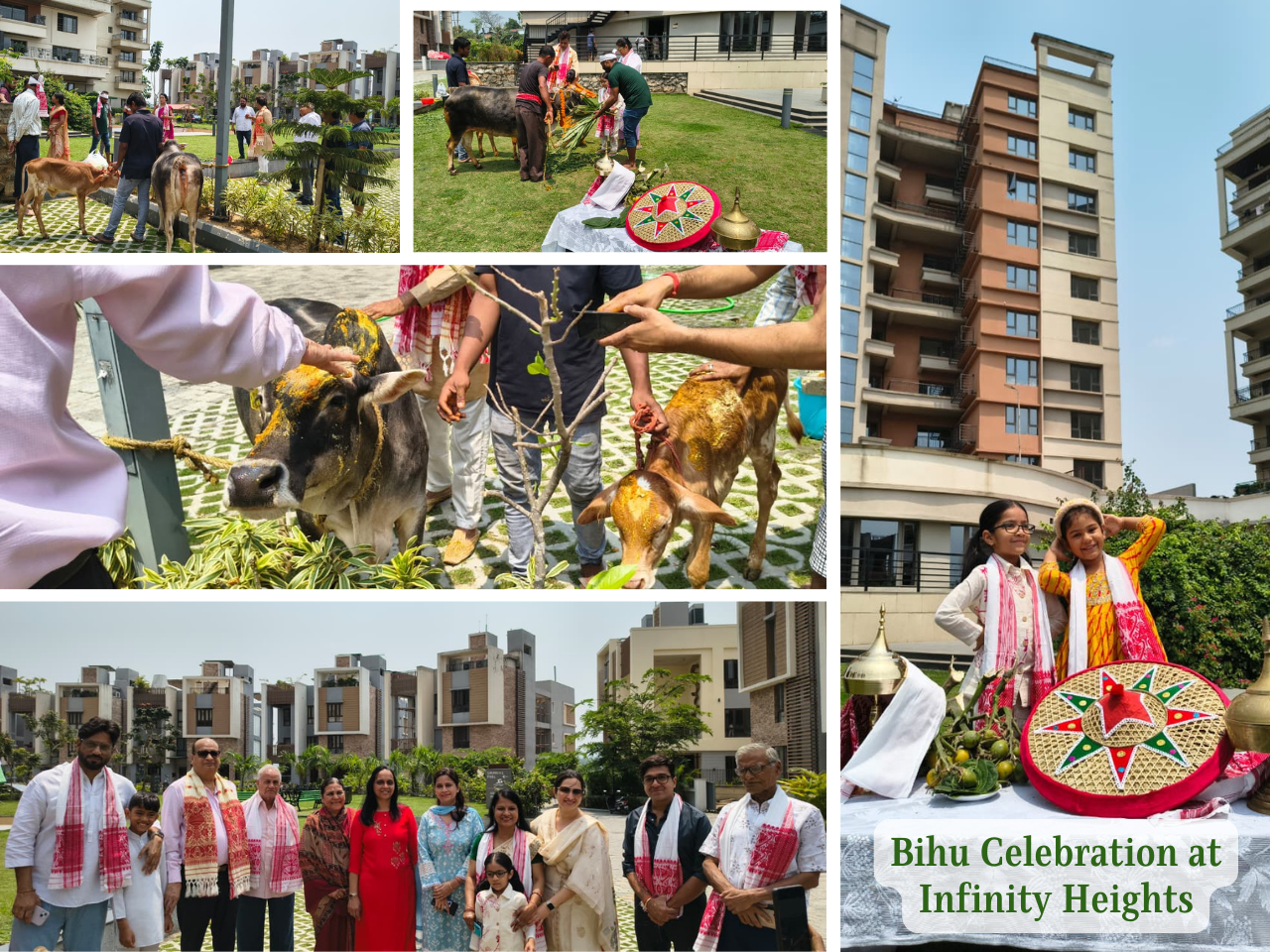
Goru Bihu and Bihu Husori celebration at Infinity Heights
One interesting trend in the contemporary Bihu celebration is the emergence of a campus-specific Bihu, celebrated at some of the newly developed premium residential housing societies. In cities like Guwahati, where land is now an expensive commodity, Bihu has found a place in the “vertical villages” created by high-rises. Bihu plays a crucial role in uniting individuals from different regions of the state.
Infinity Heights serves as a classic example, conducting the festival with the perfect blend of tradition and modern practicality. For instance, traditional celebrations like the lighting of the Meji involve huge fire hazards in densely populated urban societies like Infinity Heights.
Rather than setting ablaze the vast swathes of land in the rural areas, Mejis is replicated on a miniature scale in a safe place inside the university compound. It enables people to make offerings of Pithas and pray without posing any danger to the buildings around.
Husori, the carolling tradition, too, has become more efficient. While carollers usually visit houses in the villages, members of Infinity Heights typically hire professionals to sing in their society amphitheatre or on their lawns. The elderly members living on the topmost floor can also come down and enjoy the rhythm together.
The celebration sometimes continues at the society’s clubhouse, where they conduct activities like making Pithas and dressing up in ethnic dresses. The event makes sure that the young members, who have been brought up in a world of globalisation, learn about the exchange of gamosas and the importance of Bhogali recipes.
Though initially a common piece of cloth used by the farmers, in modern urban society, the Gamosa (red and white hand-woven towel) is a symbol of Assamese-ness. Gamosas are exchanged with much formality in Bihu events held in housing societies, especially when they involve bringing on board guest artists or paying respect to the elders in the housing society. This practice ensures the honour of the weaving profession despite living in high-tech surroundings.
The “Potluck” Tradition: While in village society, the Uruka (feast night) consists of all villagers making their contribution towards cooking fish, firewood, and work in general, in modern society, it is organised like a “Grand Bihu Potluck”. Some residents bring traditional Sunga Saul (Bamboo rice), whereas others prepare special vegetarian delicacies, and thus together they prepare a feast as if they belong to tribal communities.
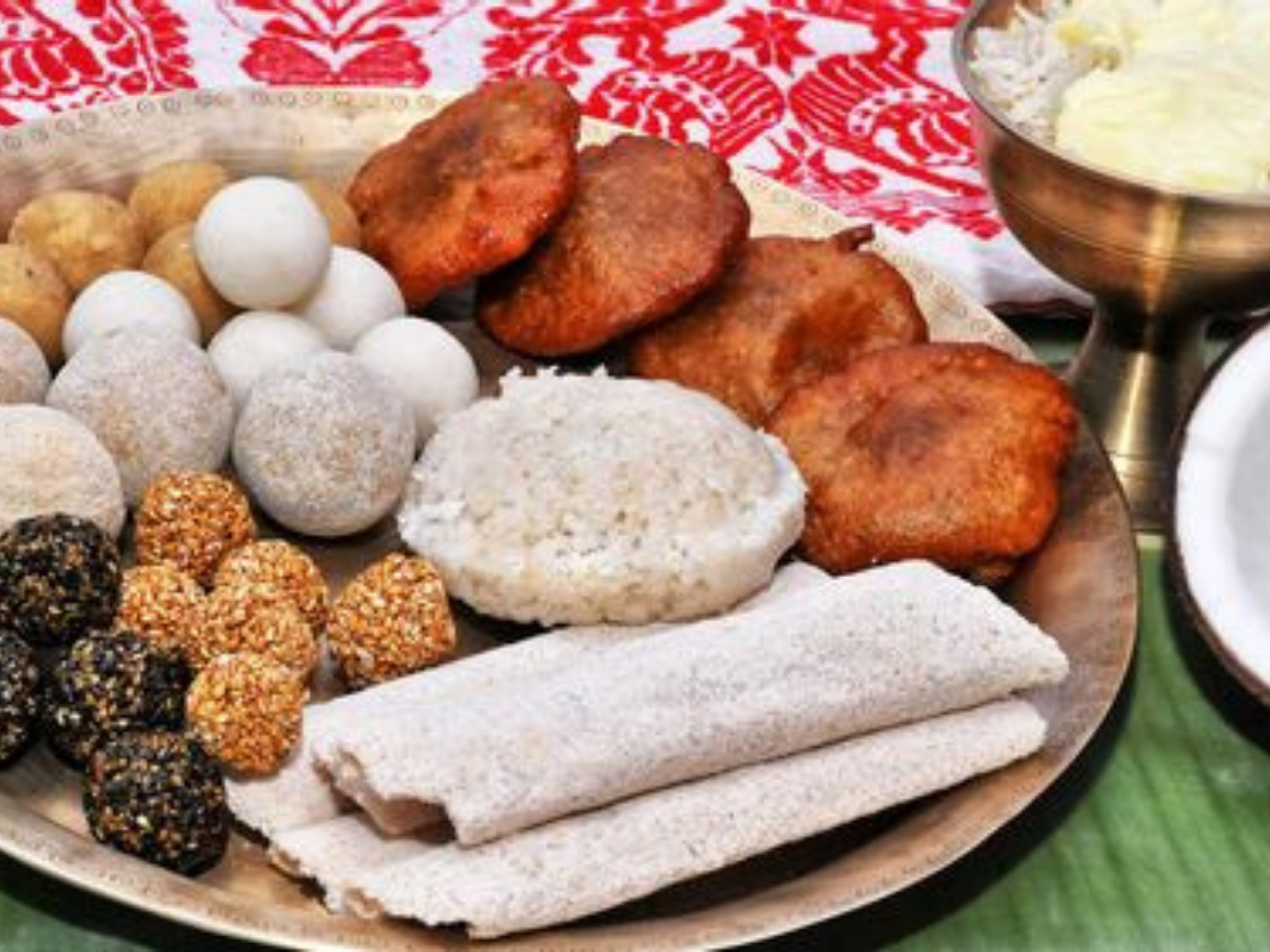
Goru Bihu and Bihu Husori Prasad
Food forms the essence of Bhogali Bihu. The food here revolves around rice, jaggery, and coconuts.
Bihu cuisine, especially during Bhogali Bihu, is an expression of the gifts that nature offers us. The Bihu cuisine is proof of the diversity and richness of rice, a common ingredient of the Brahmaputra Valley. In a traditional family in Assam, the preparation of these ingredients, collectively called Pithas, begins days before the Bihu, rather than just the day before the festival.
Let me tell you about some unique vegetarian recipes associated with Bihu:
The Til Pitha can be said to be the most difficult of all Assamese snacks when it comes to cooking, and the delicacy of touch and control of heat play significant roles here.
These are soft dumplings made out of sweet ingredients with a crunchy coating because the name is derived from its shape,, where “Ghila” means “kneecap” in Assamese.
This dish is the purest form of the Assamese “Jolpan”. No cooking required. It emphasises the purest form of milk/dairy and grain.
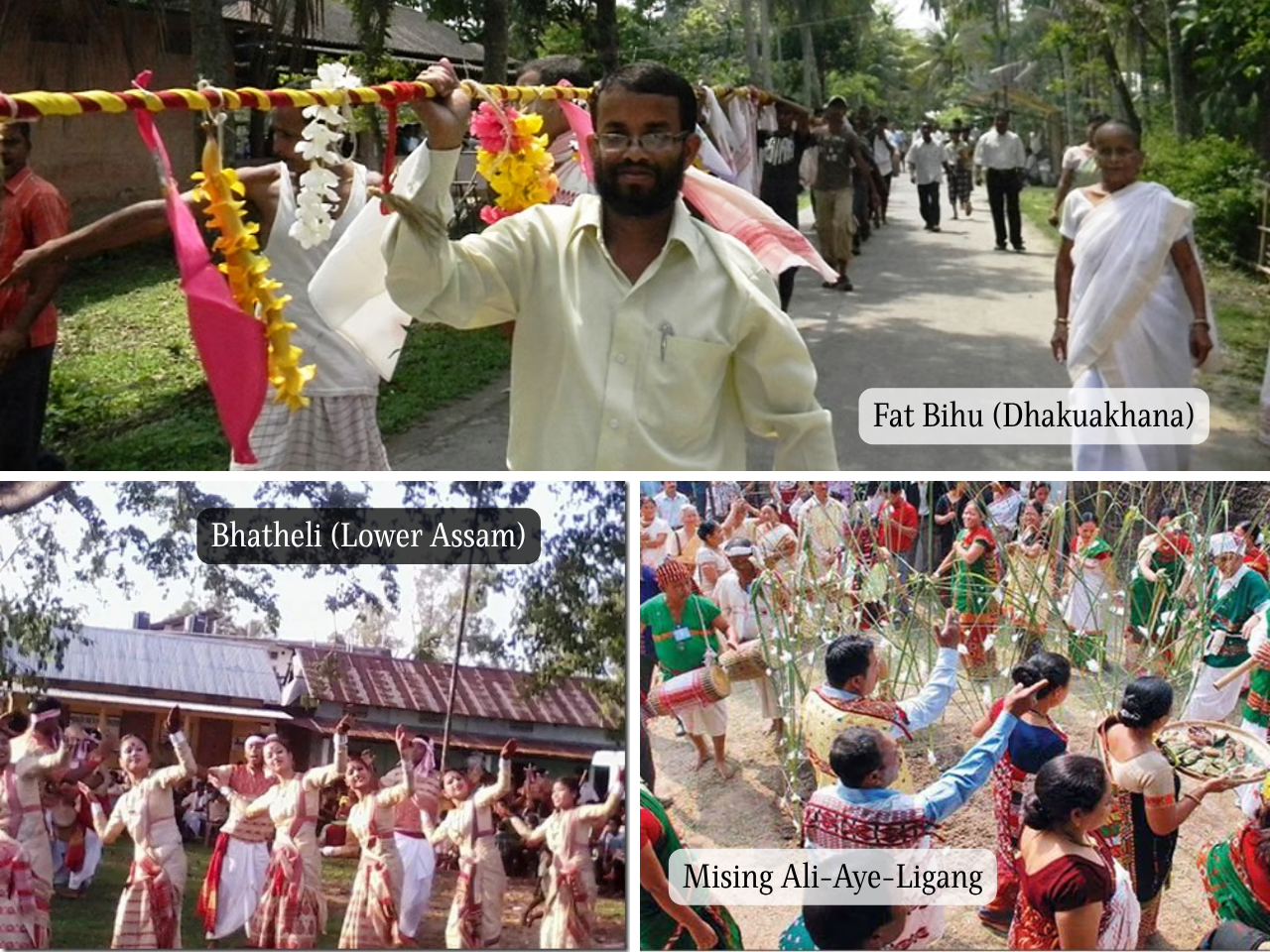
Bihu Celebration Across Parts of Assam
The Guardian of Purity: The Lakhimpur district boasts Dhakuakhana, which is famous for hosting Fat Bihu, one of the most genuine forms of the Bihu festival. “Fat” means “market” in the Ahom/Tai language, indicating a space where people would gather.
In contrast to contemporary Bihu, which is often presented in concrete settings, Fat Bihu takes place on the sandy banks of the Charikoria River, near a spot named Mohghuli.
Fat Bihu is observed after Bohag Bihu (first week of May). Fat Bihu is known for resisting the lure of commercialisation. There will be no loudspeakers or stage lights in Fat Bihu; instead, you can listen to the natural sound of the Dhols and Pepas ringing throughout the fields. It is a “cultural pilgrimage” destination for those seeking traditional folk songs (Bihu Naam).
The Festival of the Sacred Bamboo: The districts of Nalbari, Barpeta, and Kamrup present a special form of Bihu called Bhatheli (Sori, in some places), which showcases the differences in culture between Upper and Lower Assam.
The key element in this festival is the erection of a magnificent bamboo pole, which is stripped of all its branches except for the top part. There, it is decked with colourful flags, cowries, and flowers.
Two days after the Bohag festival, the bamboo poles are planted in an open place. Sometimes, two poles compete for their own “marriage.” This ritual serves as a fertility ceremony, during which the phallic bamboo symbolizes the blessing of nature. There is an unofficial contest between neighboring villages where each locality tries to create the highest bamboo and decorate it more elegantly, which ends in a simulated “fight” by touching bamboo together until it is broken down or lowered.
Ali-Aye-Ligang is another spring festival celebrated by another large ethnic group called Mising. They predominantly live in Majuli, Dhemaji, and Lakhimpur regions. Although it is a unique tribal festival, it is like the Bohag Bihu festival but specific to the Mising people. It is an essential event for marking the onset of the planting season.
Its very name tells us the story of their agricultural lifestyle. Here, “Ali” means root or seed, “Aye” refers to fruit, and “Ligang” means sowing.
The Gumrag Dance is the most prominent feature of this festival. In this dance, dancers walk in a circle performing heavy footstep movements imitating the process of treading the land and sowing seeds. The dancers dress up wearing their traditional Miri Jim and Ege.
The typical dishes prepared in Ali-Aye-Ligang are not the Assamese Pithas. Instead, Ali-Aye-Ligang is known for its Purang Apin (rice wrapped in special leaves and cooked) and Apong (Assamese traditional rice wine).
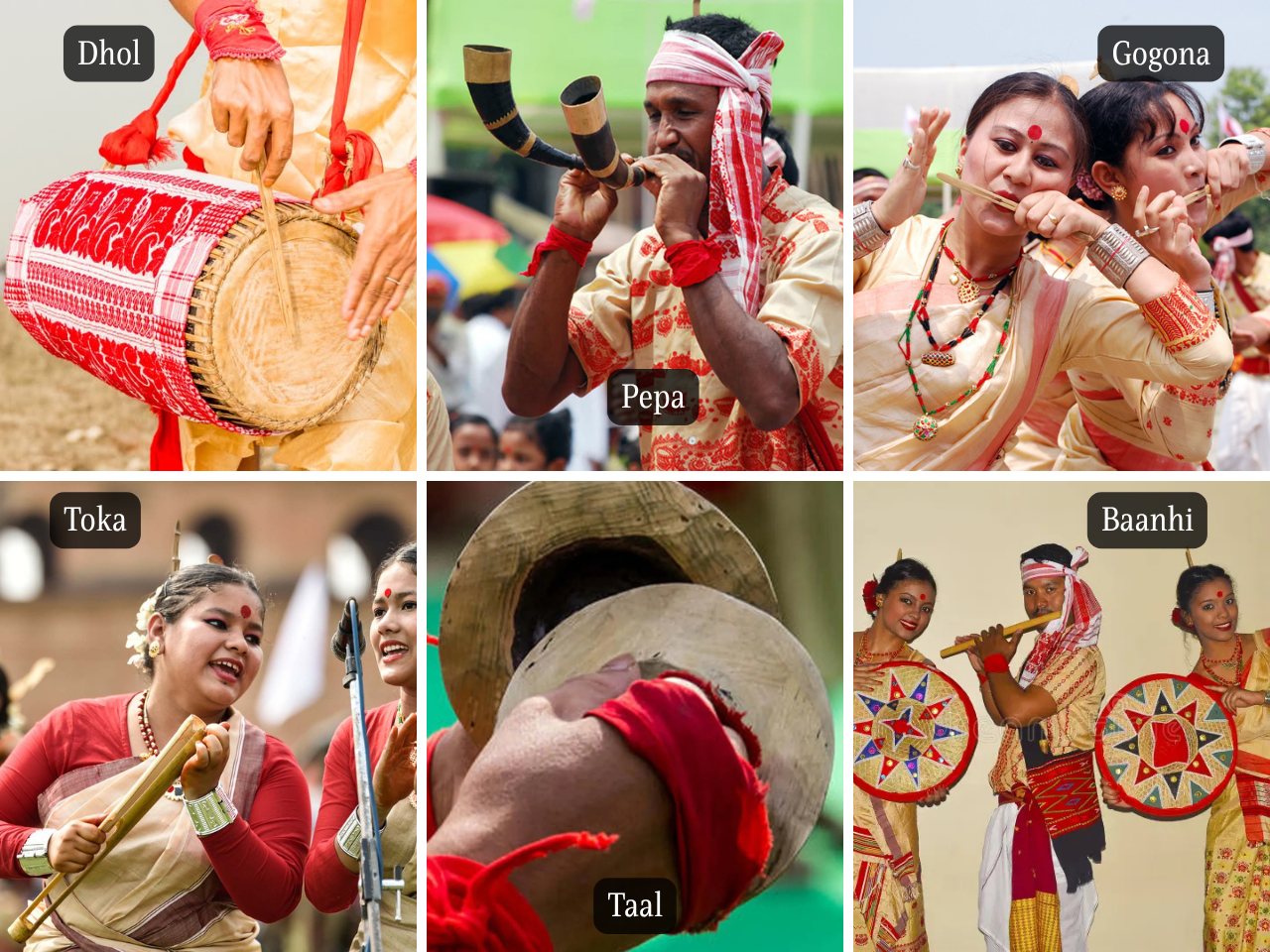
Musical Instruments used during Bihu Celebrations
The sound of Bihu is distinctive because of the uniqueness of the ensemble:
Bihu ensemble sounds are rich in their own history for the Assamese people. Music is an orchestra of wood, bamboo, horn, and metal, not just a dance accompaniment. Every instrument has its own voice that matches the mood of each particular season, from the strong sounds of thundering joy of the Dhol to the lyrical tones of Baanhi.
Dhol is the most essential musical instrument of Bihu dance. This is a two-ended barrel-shaped instrument consisting of a hollow cylinder of wood, which can be either jackfruit or mango.
Pepa is the most unique musical instrument that plays an integral part in Bohag Bihu. It is made by carving a buffalo horn with a bamboo pipe attached to its end.
Gogona is a bamboo jaw harp or lamellophone that consists of a single piece of seasoned bamboo.
The Toka is an ancient instrument that can be considered one of the most basic musical devices known to man but is vital in keeping the “tala” or rhythm, of the Bihu dance performance on track.
The taal is comprised of two metallic cymbals that are usually made from bell metal or brass.
The bamboo flute Baanhi serves as the voice of Bihu music. All the other instruments mentioned so far have rhythmic or percussion roles to play; the Baanhi supplies the melody.
If the Dhol is the heart of Assam, then Bihu Naas (Bihu Dance) can be said to be its pulse point. It is a vigorous dance featuring fast-paced hand actions, coupled with rhythmical movements of the hips akin to the swaying of the paddy. Traditionally, Bihu Dance served as a fertility ritual for the young men and women participating in it.
Bihu is different from other Indian classical dances such as Sattriya in that it has a pure rustic flavor to it. Bihu is performed in two primary forms:
There are certain postures observed in this dance style:
As far as Bihu is concerned, one cannot overlook the importance of the attire of dancers, since it constitutes a huge part of the performance itself.
The Mekhela Chador stands out as the highlight. It is made of golden Muga silk that can only be found in Assam and has the characteristics of being very durable and naturally shining. The Mekhela Chador is usually ornamented with Phul (flower designs). Women also dress up in Riha, Kopou Phul (Foxtail Orchid) adorns their hair, and Jeti (local henna) decorates their palms.
Dhoti and Gamosa are used as part of traditional attire. The Gamosa is a white, hand-woven piece of cloth that has red edges and symbolises the respect of the culture.
The Bihu Dance is more than a choreographed performance; it’s an interaction of the soul with nature. In the midst of the chaos of a busy urban environment, as soon as the dancers start performing their synchronised spinning routine and the first note of the Pepa is played, the boundaries of the materialistic world fall apart.
Bihu is not just restricted within the borders of the Brahmaputra Valley region. With the migration of the Assamese people all over the globe for educational opportunities and jobs, “the spirit of Bihu” traveled along with the Assamese in their suitcase. Bihu, today, has become an excellent way for the Assamese people to reconcile their double identity, being true to their roots but prospering in a globalized world.
For the Assamese diaspora, Bihu is much more than a festival. It has become an important anchor, allowing them to connect with their “home soil”. The London Bihu Committee, the Assam Association of North America (AANA), and several other groups around the Bay Area of San Francisco and Sydney organise huge Bihu events internationally.
The Bihu festival has emerged as one of the most successful Indian cultural exports. India often sends representatives from Bihu festivals as part of its cultural diplomacy activities under the Indian Council for Cultural Relations (ICCR).
Bihu has successfully broken free from being associated exclusively with the Assamese community and become part of the broader culture of Indian metropolitan cities such as Bangalore, Delhi, and Mumbai.
Although modern-day Bihu is a secular celebration where people from all religions unite in celebration in Assam, the festival still retains its ancient mythological background. The festival acts as a link between the actual cultivation of the soil and the spirit world.
On a wider canvas in India, Lord Shiva is known as the renounced ascetic at Mt. Kailash. But within the valley of the river Brahmaputra, it is a different story told in Assamese folklore – that Shiva is indeed a “Man of the Soil.”
The attention now changes from the green field to the warm glow of the communal fire. The Fire God Agni reigns supreme during this time of celebration.
There is definitely one “supreme” god in the celebrations of Bihu, and that is Earth Mother.
The uniqueness of Bihu can be found in the way it resists brittleness. While many other folk cultures wilt in the face of modernization, Bihu continues to flourish because it adapts. The festival has shifted from being performed at the muddied banks of rivers to the glamorous stages in Guwahati as well as on the smartphones of people across the world. By doing this, it ensures that it retains relevance among a Gen Z Assamese youngster living in London as well as a farmer in Upper Assam. It is a form of culture which keeps updating its “software” while retaining its “source code.”
The sound of the Dhol is the ultimate point of anchorage. In the language of music, it is the constant. No matter how political scenarios or economic conditions and even landscapes might shift, the 7/8 and 4/4 rhythms of Bihu are still the constant heartbeat of the area. If there is one Dhulia left who plays the drums, Assam will continue to have a beating heart in its culture. This sound is above languages and class structures and represents a welcome home to anyone from the land of the red rivers and blue hills.
Bihu is more than a festival; it is the breathing spirit of a civilisation unwilling to be ignored.
Infinity Heights (www.infinityheights.in) is a premium residential development in Guwahati, thoughtfully designed for modern families seeking space, comfort, and a refined lifestyle. Strategically located in one of the city’s fast-growing residential corridors, the project combines seamless connectivity with a peaceful, elevated living environment. Built to meet the aspirations of today’s homebuyers, Infinity Heights offers well-planned, spacious apartments within a secure gated community.
The development focuses on holistic living, featuring contemporary architecture, ample open spaces, and lifestyle-driven amenities that promote well-being, convenience, and community interaction. With proximity to key commercial hubs, educational institutions, healthcare facilities, and major transit routes, Infinity Heights ensures that residents enjoy both accessibility and tranquillity. The project reflects the evolving real estate landscape of Guwahati, where quality construction, RERA compliance, and future-ready infrastructure are becoming essential benchmarks. Positioned as a smart investment opportunity, Infinity Heights aligns with the city’s rapid growth and rising property demand—making it an ideal choice for both end-users and long-term investors looking to be part of Guwahati’s promising future.
Experience the Infinity Heights lifestyle. Follow our journey on Facebook, Instagram, and LinkedIn, or visit us on Google Business.
Address Details:Infinity Heights, Krishna Nagar Kalapahar Lal Ganesh, (Near - Uruli Bibaha Bhaban) Guwahati, Assam 781034
Availability
3 BHK Flats for Sale in Guwahati 4 BHK Flats for Sale in Guwahati
RERA No. :
Villas – RERAA KM 01 of 2021
Flats - ARERAKMPPROJ2017-8


© by Infinity Heights